

Beyond Meetings: How to Effectively Address Operational Problems with Structured Solutions

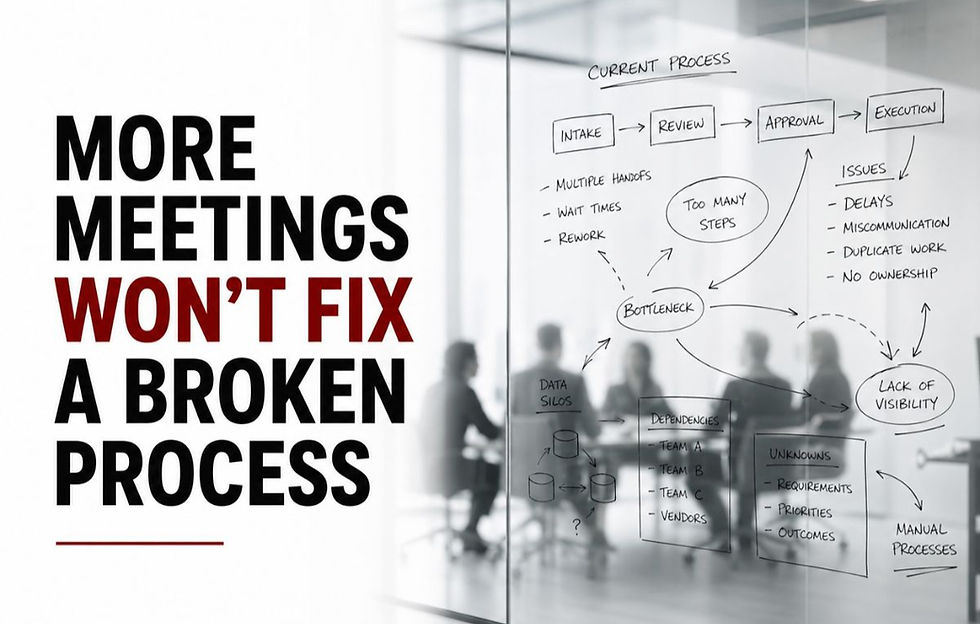
Many organizations believe that adding more meetings, discussions, and alignment sessions will solve their operational problems. While communication is essential, it cannot replace clear structure. When processes are unclear, inconsistent, or uncontrolled, simply talking about them more often creates the illusion of progress without fixing the root causes. Real improvement happens when organizations define, standardize, and control their processes at the operational level.
This post explores why meetings alone do not solve operational challenges and how structured systems can lead to lasting improvements. We will also share practical steps organizations can take to move beyond endless discussions and implement solutions that work.
Why More Meetings Don’t Solve Operational Problems
Meetings are often seen as the go-to solution for any issue. When a problem arises, the immediate reaction is to schedule another meeting to discuss it. However, this approach has several drawbacks:
Talk without action: Meetings can generate many ideas and conversations but often lack follow-through.
Wasted time: Frequent meetings take time away from actual work and problem-solving.
Illusion of progress: Teams may feel they are making progress by discussing problems repeatedly, but the underlying issues remain.
Confusion and frustration: Without clear processes, meetings can become repetitive and frustrating, leading to disengagement.
For example, a manufacturing company might hold weekly meetings to discuss production delays. If the root cause is an inconsistent workflow or unclear responsibilities, talking about delays won’t fix the problem. The delays will continue until the process itself is addressed.
The Importance of Clear, Standardized Processes
Operational problems often stem from unclear or inconsistent processes. When teams do not have a clear, standardized way to perform tasks, errors and inefficiencies multiply. Defining and controlling processes helps organizations:
Reduce errors: Clear steps minimize mistakes and rework.
Improve consistency: Standardization ensures the same quality and output every time.
Increase efficiency: Well-designed processes eliminate unnecessary steps and delays.
Empower employees: Clear guidelines help team members understand their roles and responsibilities.
For instance, a customer service team that follows a standardized process for handling complaints can resolve issues faster and with higher customer satisfaction. Without a clear process, responses may vary widely, causing confusion and dissatisfaction.
How to Move Beyond Discussion to Action
To address operational problems effectively, organizations need to shift from endless discussions to structured solutions. Here are practical steps to achieve this:
1. Map Your Current Processes
Start by documenting how work is currently done. This includes:
Identifying each step in the process
Noting who is responsible for each step
Highlighting bottlenecks or inconsistencies
Mapping processes visually, such as with flowcharts, helps teams see the full picture and identify areas for improvement.
2. Define Clear Standards and Procedures
Once the current process is understood, create clear standards and procedures that everyone follows. This involves:
Writing step-by-step instructions
Setting quality and performance standards
Defining roles and responsibilities
Clear documentation ensures everyone knows what to do and how to do it.
3. Implement Controls and Monitoring
To maintain process quality, put controls in place. This can include:
Checklists to ensure steps are completed
Regular audits or reviews
Performance metrics to track results
Monitoring helps catch deviations early and keeps processes on track.
4. Train and Support Your Team
Even the best processes fail without proper training. Provide:
Hands-on training sessions
Easy access to process documentation
Ongoing support and feedback
Empowered employees are more likely to follow processes and suggest improvements.
5. Continuously Improve
Processes should evolve based on feedback and changing needs. Encourage teams to:
Report issues and suggest changes
Review process performance regularly
Update procedures as needed
Continuous improvement keeps operations efficient and effective.
Real-World Example: How Structured Solutions Made a Difference
At RoltoQS, we work with organizations to implement structured systems that solve problems at their root. One client, a logistics company, struggled with frequent delivery delays. They held daily meetings to discuss issues, but delays persisted.
We helped them map their delivery process and discovered unclear handoffs between departments. By defining clear procedures and responsibilities, introducing checklists, and training staff, the company reduced delays by 30% within three months. The meetings shifted from problem discussions to progress updates, saving time and improving morale.
Why Structure Matters More Than Discussion
Meetings and discussions are valuable for communication and alignment, but they cannot replace solid structure. Without defined processes:
Teams lack clarity on how to perform tasks
Problems reoccur despite repeated conversations
Time is wasted on talking instead of doing
Structured solutions provide a foundation for consistent, efficient operations. They turn conversations into actions and results.
Take the Next Step Toward Operational Excellence
If your organization spends too much time in meetings without seeing real improvements, it’s time to focus on structure. Start by mapping your processes, defining clear standards, and implementing controls. Support your teams with training and encourage continuous improvement.
At RoltoQS, we specialize in helping organizations move beyond discussion to build systems that solve problems at their core. Visit roltoqs.com to learn how we can support your journey to stronger, more effective operations.


Comments