

Harnessing Visual Management to Elevate Problem-Solving and Drive Operational Clarity in Manufacturing
- Rolto Quality Solutions

- Dec 29, 2025
- 4 min read
Manufacturing environments are complex and fast-paced. Leaders face constant pressure to improve efficiency, reduce errors, and maintain high quality. Visual management offers a clear advantage in meeting these challenges. It goes beyond simple signage or boards; it creates a transparent, real-time communication system that strengthens problem-solving and operational clarity. This clarity enables teams to act quickly, reduce mistakes, and align around shared goals.
Visual management transforms the production floor into a dynamic space where information flows freely, and decisions are supported by clear, visible data. This post explores how manufacturing leaders, plant managers, and quality professionals can use visual management to build a culture of continuous improvement and operational excellence.
Visual Management as a Competitive Advantage
Visual management is often mistaken for just posting signs or charts. In reality, it is a strategic tool that makes critical information visible to everyone at the right time and place. This visibility reduces ambiguity and supports faster, more confident decision-making.
When operators, supervisors, and managers can see the status of production, quality, and safety at a glance, they spend less time searching for information or waiting for updates. This speed in communication translates into quicker responses to issues, fewer delays, and less downtime.
Manufacturers that embrace visual management gain a competitive edge by:
Improving transparency across teams and shifts
Enabling proactive problem-solving before issues escalate
Aligning daily activities with strategic performance goals
Reducing dependency on verbal instructions or memory
Visual management is not a one-time setup but a continuous system that evolves with the operation’s needs. It supports a culture where everyone understands what good performance looks like and can spot deviations immediately.
How Visual Cues and Dashboards Reduce Ambiguity
Visual cues come in many forms: color-coded signals, workflow diagrams, status boards, and digital dashboards. Each serves to clarify complex processes and highlight key information.
For example, a color-coded production board might use green to indicate on-target performance, yellow for caution, and red for urgent attention. This simple system removes guesswork and helps teams prioritize actions.
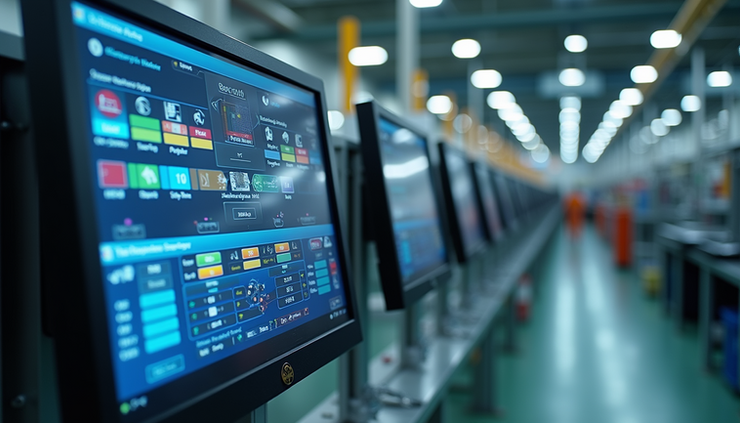
Dashboards that display real-time key performance indicators (KPIs) provide a snapshot of production efficiency, quality rates, and downtime. When these dashboards are placed in visible locations on the shop floor, they keep everyone informed and focused on meeting targets.
Workflow visuals, such as standardized work instructions displayed at workstations, guide operators step-by-step. This reduces errors caused by variation or misunderstanding and supports consistent quality.
By making data and process status visible, visual management eliminates confusion and supports faster, more accurate decisions.
Building a Problem-Solving Culture Through Visibility
A strong problem-solving culture depends on clear visibility of issues and their impact. Visual management creates this visibility by making problems and their status visible to all stakeholders.
When quality alerts or defect boards are displayed openly, teams can see recurring issues and track progress on corrective actions. This transparency reduces hesitation and the tendency to ignore problems.
Visibility also reduces dependency on specific individuals. Instead of waiting for a supervisor’s input, operators can use visual signals to initiate problem-solving steps immediately. This speeds up resolution and prevents errors from recurring.
For example, a production line with visual quality alerts can highlight defects as soon as they occur. Operators can stop the line, investigate, and document the issue using standardized visuals. This approach encourages ownership and accountability at every level.
Practical Examples of Visual Management in Manufacturing
Visual management takes many practical forms on the production floor. Here are some examples that manufacturing leaders can implement:
Production Floor Visuals: Use floor markings, color-coded zones, and visual work instructions to guide material flow and operator tasks.
Quality Alerts: Display boards showing current defects, root causes, and corrective actions to keep quality top of mind.
Status Boards: Place daily production targets, shift progress, and downtime reasons in visible locations to keep teams aligned.
KPI Dashboards: Use digital or analog dashboards to show real-time metrics such as cycle time, yield, and equipment availability.
Standardized Work Visuals: Post step-by-step instructions and safety reminders at workstations to ensure consistent execution.
These tools create a shared language and understanding that supports teamwork and continuous improvement.
Visual Management Supports Lean Methodologies and Reduces Waste
Lean manufacturing focuses on eliminating waste and improving flow. Visual management directly supports these goals by making waste visible and standardizing processes.
For example, visual signals can highlight excess inventory, waiting times, or defects immediately. This visibility helps teams identify and remove non-value-added activities quickly.
Standardized work visuals reduce variation and rework, which are common sources of waste. When everyone follows the same clear instructions, quality improves and cycle times shorten.
Visual management also improves accountability. When performance data is visible, teams take ownership of their results and are motivated to improve.
By integrating visual management with lean tools such as 5S, Kanban, and problem-solving boards, manufacturers can build a more efficient and responsive operation.
Leadership’s Role in Reinforcing Visual Management
Visual management requires active leadership to be effective. Leaders must:
Regularly review and update visual tools to keep them relevant
Align visuals with key performance indicators and business goals
Encourage teams to use visuals as part of daily routines
Recognize and reward behaviors that support transparency and problem-solving
Provide training to ensure everyone understands the visuals and their purpose
Without leadership support, visual management risks becoming ignored or outdated. Leaders set the tone by demonstrating commitment and integrating visuals into performance reviews and meetings.
Visual Management as a Foundation for Continuous Improvement
Visual management is more than a communication tool; it is a foundation for continuous improvement. By making performance and problems visible, it creates a feedback loop that drives learning and adaptation.
Teams can quickly identify trends, test solutions, and track results using visual tools. This cycle accelerates improvement and builds a culture where everyone contributes to operational excellence.
Manufacturers that invest in strong visual management systems position themselves to respond faster to market changes, reduce costs, and improve customer satisfaction.
Visual management transforms manufacturing operations by creating clarity, reducing ambiguity, and enabling faster problem-solving. It supports lean principles, improves accountability, and builds a culture focused on continuous improvement. Leaders who prioritize visual management unlock the full potential of their teams and processes.


Comments